The Harvest Home
About the Tune
"The Harvest Home" is a popular tune often played by musicians. It’s generally considered a hornpipe.
What it Sounds Like: Some people find the tune's melody to be somewhat simple or "insipid," but many find it enjoyable to play and useful for practicing triplets.
Variations in Key and Style: The tune is often played in D major, but some musicians have played it in D minor. Some people like to add a "minor" feel with a flattened 6th note. Others experiment with a "Middle Eastern" sounding variation. It has also been played in F major.
Connections to Other Tunes & Names: It's sometimes referred to as "The Cork Hornpipe." There's speculation it may be related to a Scottish hornpipe called “Champion of the Seas.” It shares similarities with the B part of the “Balladrum House” Strathspey.
Origins & History: The tune has appeared in music collections dating back to at least the 1830s, in both the United States and Europe. It has been linked to a 1690s-1750s harvest song, but it is not the same tune. The tune has been recorded on numerous albums.
How It's Played: Hornpipes are typically written as "straight" time, but are played with a characteristic "dotted" or swung rhythm. Some musicians use triplets to add variation.
Associated Recordings and Performances:
- James Galway & Kevin Conneff recorded it as "Belfast Hornpipe."
- Neil O' Boyle played a version in 1937.
- Edel Fox plays a version on her album “Chords and Beryls."
- Niall Vallely and Liz Doherty played a version on Nomos' album “I won’t be afraid anymore.”
- Oasis (the band) used a version on their song "It's Good to Be Free."
Similar Tunes: It is related to, or has been confused with, the “Cincinnati Hornpipe.”
Get ready for the session
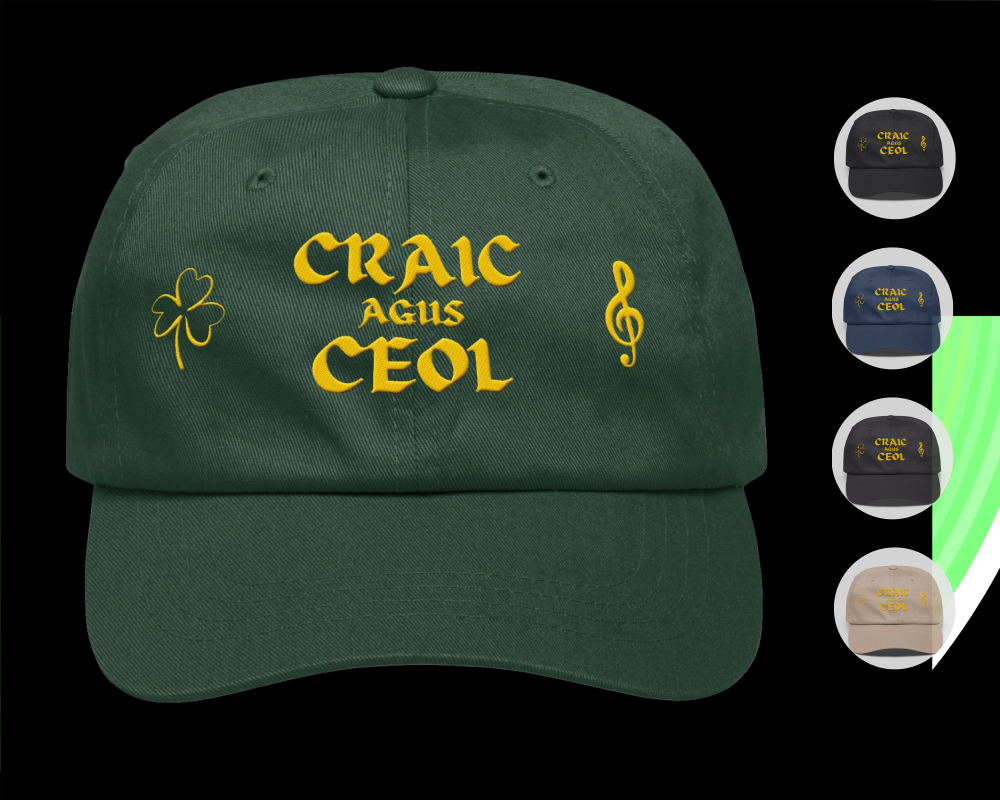
Irish Music Hat - Craic agus Ceol Classic Cap
What does 'Craic agus Ceol' mean? It simply means 'Fun and Music' in Irish. This classic cap is perfect for any session or festival, and is a great way to show your love for Irish music and culture. For a limited time also, get 10% off using the code TUNEWEB10 at checkout. Just as a thanks for using Inside Irish Music for practicing some tunes today.
Cheers,
Ronan.
Listen and Learn the Tune:
Tunes to Try Next
Disclaimer: Much of this tune background is hard to trace, and some details remain speculative. These summaries draw on trad community discussion and other available sources, and will be updated as better verified information emerges. If you spot an error or have confirmed information to add, please get in touch and I'll update the site.