King Of The Fairies
About the Tune
'King Of The Fairies' is a widely played reel tune with a fascinating history and a remarkable number of variations. Its interpretations differ considerably, leading to a rich tapestry of performance styles. While generally played at a moderate tempo, many players experiment with different approaches.
Musical Details:
- The tune commonly appears in both AAB and AABB structures, leading to significant differences in phrasing and overall feel. The AAB form is often associated with a more balanced, flowing character, while the AABB form is more common in modern session settings.
- Tempo can vary dramatically, from slower, rubato interpretations to more driving, consistent rhythms. This flexibility affects the perceived speed and energy of the tune.
- Harmonic subtleties, such as the use of D sharps in certain renditions, contribute to the unique character of individual performances.
- ABC notation reveals diverse approaches to ornamentation and phrasing.
Origins and Connections:
The precise origins of 'King Of The Fairies' remain somewhat obscure. Its history is interwoven with other tunes and musical traditions, making a definitive lineage difficult to trace.
Several strong connections have been suggested:
- 'Bonny Charlie' shows a close resemblance, suggesting a shared ancestry and a possible historical link.
- 'After the Battle of Aughrim' contains recognizable shared phrases that imply a common source or tune family.
- 'Brenin y Tylwyth Teg' is the Welsh title and suggests wider cultural adaptation across regions.
Performances and Interpretations:
- Ted Furey is considered a legendary interpreter of the tune, and recordings of his version are highly regarded.
- Kevin Burke is a key reference point, and his version is often cited as embodying a traditional approach.
- Leahy is celebrated for a technically masterful rendition with innovative harmonics and distinctive piano accompaniment.
- Horslips helped popularize the tune through an early Celtic rock arrangement, though opinions on that version are mixed.
- Banda Celta - Danzante demonstrates regional variations in phrasing and instrumentation.
- Kate McMayland and Her Orchestra present a unique orchestral interpretation.
Dance Context:
The AAB structure is often favored in stepdancing because it allows for a specific dance step pattern after the A section. Both AAB and AABB structures are used in other dance contexts.
Disclaimer: Due to the tune's rich history and numerous interpretations, definitive information regarding its origins and specific influences is often based on speculation and tradition. The diversity of performance styles reflects the evolving nature of traditional music.
Get ready for the session
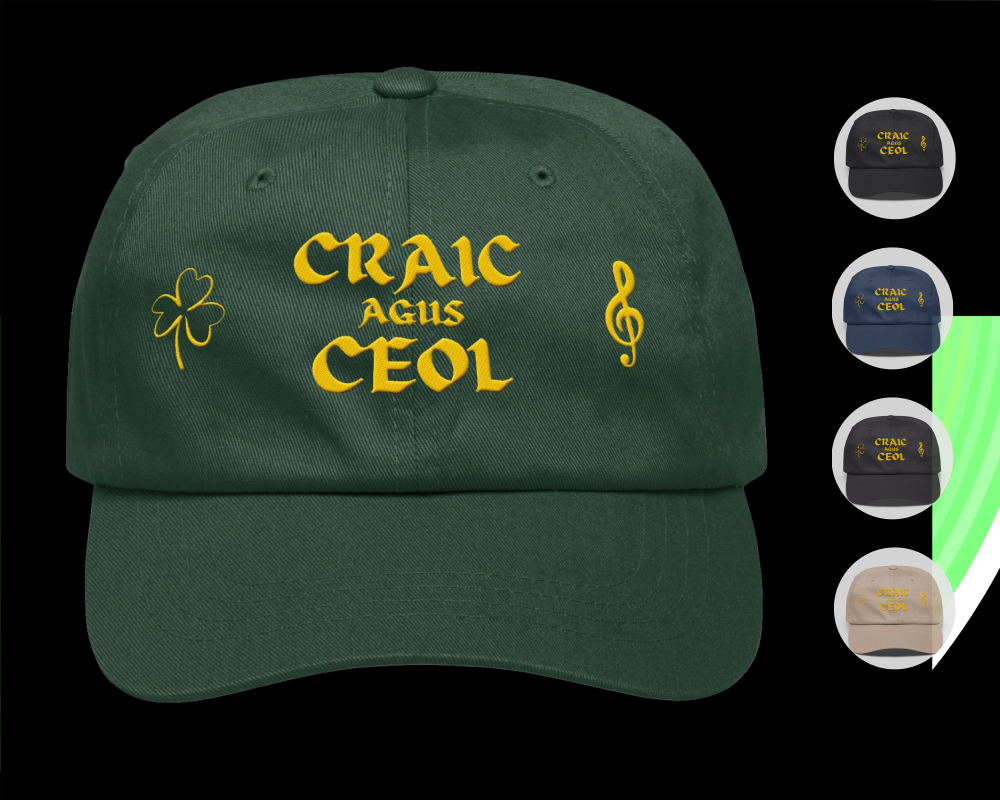
Irish Music Hat - Craic agus Ceol Classic Cap
What does 'Craic agus Ceol' mean? It simply means 'Fun and Music' in Irish. This classic cap is perfect for any session or festival, and is a great way to show your love for Irish music and culture. For a limited time also, get 10% off using the code TUNEWEB10 at checkout. Just as a thanks for using Inside Irish Music for practicing some tunes today.
Cheers,
Ronan.
Listen and Learn the Tune:
Tunes to Try Next
Disclaimer: Much of this tune background is hard to trace, and some details remain speculative. These summaries draw on trad community discussion and other available sources, and will be updated as better verified information emerges. If you spot an error or have confirmed information to add, please get in touch and I'll update the site.