History Behind the Song: Danny Boy
Danny Boy is a song that stirs deep emotions and has become a global emblem of Irish culture. You might think you know this beloved ballad inside and out, but its true story is a captivating tapestry woven with surprising origins, a dash of mystery, and a universal message that transcends its seemingly simple words. Get ready to unravel the rich, sometimes ironic, history of this cherished — and occasionally, let's be honest, overplayed — masterpiece.
The Tune's Mysterious Ancient Roots: The "Londonderry Air"
Long before the lyrics of "Danny Boy" ever graced a page, its haunting melody had a life of its own, deeply rooted in Irish soil. This captivating tune is famously known as the "Londonderry Air" (or simply "Derry Air" to some, depending on who you ask!). Its true origins are still shrouded in delightful mystery.
The earliest known variant of the melody, called "The Young Man's Dream," emerged in 1792. It was performed at the Belfast Harp Festival by the renowned harper Dennis Hempson, and meticulously transcribed by music chronicler Edward Bunting. This transcription was published in 1796, a crucial step in preserving the ancient, dying Gaelic harp tradition.
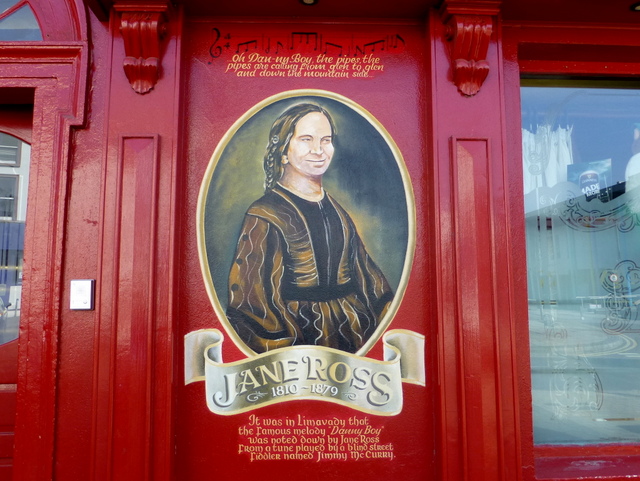
The version we recognize today was brought to light in 1851 in Limavady, Ireland. A woman named Jane Ross had a chance encounter: she heard a blind, unnamed traveling fiddler playing a uniquely beautiful melody on the street. Recognizing its potential, Ross, who dedicated herself to preserving ancient Irish music, notated the tune for her friend George Petrie, a "titan of Irish musical preservation". Petrie published it in 1855 in his collection The Ancient Music of Ireland, simply titling it "Londonderry Air" because, well, the original name was lost to time (and sadly, so was the fiddler's name—a true missed opportunity for musical immortality!).
While theories about the tune's ancestry abound—some suggest a Celtic harpist in the 1600s or Scottish Highlands roots—the exact lineage of the "Londonderry Air" remains a topic of spirited debate. Interestingly, one theory even suggests Ross might have initially transcribed the tune in the wrong time signature. Regardless of its precise beginning, the tune gained traction and was set to numerous other lyrics throughout the late 19th century. The very first known lyrics to accompany this melody were "The Confession of Devorgilla" (also known as "Oh Shrive Me Father"), written by Edward Fitzsimmons and published in 1814.
The English Lawyer, the Irish Sister-in-Law, and a Perfect Match
Now for the lyrics of "Danny Boy" as we know and tearfully love them today. In 1910, an English lawyer and prolific lyricist named Frederic Weatherly, living in Bath, Somerset, penned the words to "Danny Boy". Weatherly was a true wordsmith, credited with writing lyrics for an astonishing 3,000 popular songs, including "The Holy City" and "Roses of Picardy". His initial attempt to set "Danny Boy" to a different tune, however, didn't quite catch on.
The stars aligned in 1913 (though some accounts place it in 1912). Weatherly's Irish-born sister-in-law, Margaret Enright Weatherly (affectionately known as "Jess"), who was living in America, sent him a copy of the "Londonderry Air". Upon hearing this sweeping melody, Weatherly had an epiphany: it was a perfect match for his existing "Danny Boy" lyrics! He swiftly modified his words to fit the tune's meter, and just like that, the "Danny Boy" we cherish today was born. It's a delightful irony, isn't it? The unofficial anthem of Irish culture, masterfully brought to life by a British lawyer. It simply goes to show that some artistic connections are truly meant to be.
The Full Lyrics of "Danny Boy"
Oh, Danny Boy, the pipes, the pipes are calling From glen to glen, and down the mountainside, The summer’s gone, and all the roses falling, It’s you, it’s you must go and I must bide.
But come ye back when summer’s in the meadow, Or when the valley’s hushed and white with snow, It’s I’ll be here in sunshine or in shadow,— Oh, Danny Boy, oh Danny Boy, I love you so!
But when ye come, and all the flowers are dying, If I am dead, as dead I well may be, Ye’ll come and find the place where I am lying, And kneel and say an Ave there for me;
And I shall hear, though soft you tread above me, And all my grave will warmer, sweeter be, For you will bend and tell me that you love me, And I shall sleep in peace until you come to me! And I shall sleep in peace until you come to me! Come to me!
From Trenches to Tabernacles: "Danny Boy's" Global Ascent
Once its lyrics and melody found their perfect harmony, "Danny Boy" embarked on a remarkable journey to global fame. Weatherly first entrusted the newly formed song to English opera singer Elsie Griffin. Griffin's performances for homesick British troops in France during World War I were particularly impactful; her stunning voice and the song's emotional depth resonated deeply with the young soldiers, making it an instant smash. The first recording of "Danny Boy" followed shortly after, in 1915, by Austrian-born opera singer Ernestine Schumann-Heink.
Since those early days, "Danny Boy" has become a cultural touchstone, covered by an incredible array of artists across virtually every genre. The list reads like a who's who of music legends: Bing Crosby, Judy Garland, Elvis Presley, Patti LaBelle, Johnny Cash, and even The Muppets!. Its enduring influence is evident even today, with resemblances noted in contemporary hits like Josh Groban's "You Raise Me Up". In 2009, the Mormon Tabernacle Choir even performed it at the iconic Red Rocks Amphitheater in Colorado.
"Danny Boy" quickly became an unofficial anthem for Irish Americans and Irish Canadians, its emotional resonance making it exceptionally popular for funerals and memorial services. Its pervasive presence in these solemn occasions led to a rather humorous, albeit controversial, situation: some Catholic dioceses in America actually banned it from funeral masses, arguing it wasn't an official part of the ceremony. This sparked memorable declarations, such as that from retired Irish American police officer Charlie McKenna of Rhode Island, who famously stated, "I want ‘Danny Boy’ sung at my funeral mass, and if it isn’t, I’m going to get up and walk out.” Talk about having the last word! The song's undeniable power was further underscored when opera star Renée Fleming performed it at the memorial service for late U.S. Senator John McCain in 2018, fulfilling his personal request to honor his Irish heritage.
The Enduring Heart of "Danny Boy": Sorrow, Nostalgia, and Hope
Perhaps the greatest secret to "Danny Boy's" enduring appeal lies in its beautifully ambiguous yet universal meaning. Frederic Weatherly never offered a definitive interpretation, leaving its true intent open to decades of heartfelt debate.
Common interpretations of the song include:
- A parent's poignant farewell to a son embarking on a journey, possibly to war. The "pipes calling from glen to glen" could evoke the stirring sound of war pipes, though this imagery is sometimes more closely associated with Scotland.
- A deeply resonant lament for a loved one leaving as part of the Irish diaspora, capturing the profound longing for home experienced by those displaced from their homeland.
- A universal expression of grief for any lost loved one, offering a tender farewell intertwined with the comforting promise of a peaceful reunion in the afterlife.
This inherent flexibility allows the song to speak to nearly everyone, regardless of their background. While an alternative 1918 sheet music version, "Eily Dear," suggested that "Danny Boy" was exclusively for a female vocalist, this was likely a publisher's commercial decision to broaden its appeal, rather than Weatherly's original artistic intention.
Despite its English origins, "Danny Boy" has been wholeheartedly embraced by Ireland and its global diaspora. Irish folk music, like many musical traditions, is syncretic, readily absorbing songs from diverse sources. Thus, the origin of a song often matters less than its profound resonance with the listener. "Danny Boy" perfectly embodies a deep cultural grief, nostalgia, and a unique blend of sorrow and unwavering hope that lies at the heart of the Irish experience. As one observer noted, it simply "checks the boxes of what one would expect an Irish song to be". It offers "a longing for home, and a hope for return" that has touched countless hearts. Indeed, the composer Hubert Parry once hailed the "Londonderry Air" as one of the most perfect emotional tunes ever created.
So, while some Irish people may playfully admit to a "love/hate relationship" with "Danny Boy" due to its sheer omnipresence, as author Malachy McCourt wisely notes, even the most jaded among us will often find themselves joining in, especially when a wave of homesickness washes over them. It is, after all, "a fine specimen of Irish love, beauty, and grief".