Green Fields of France - The Story Behind the Song and was Willie McBride Real?
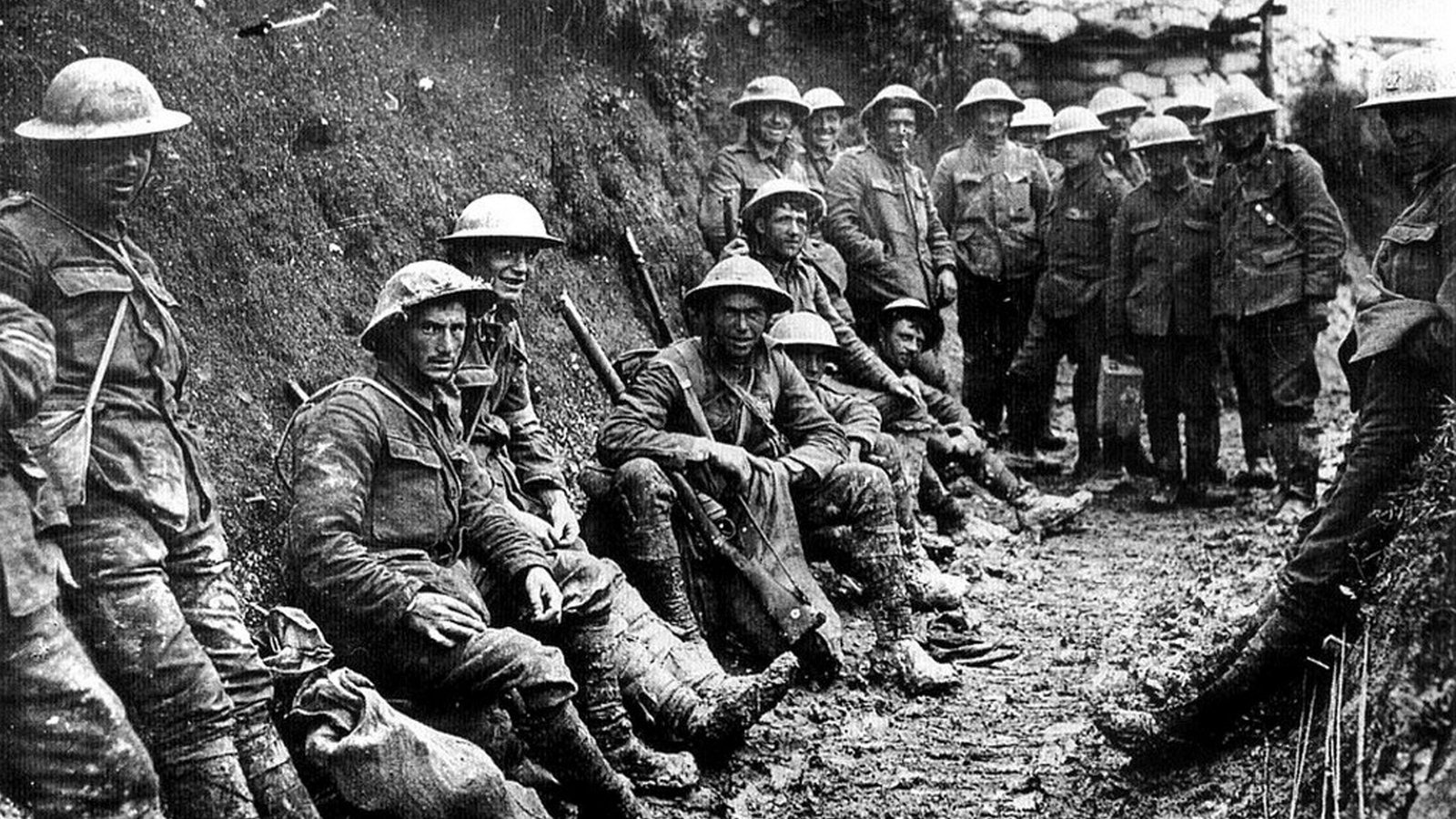
World War I annihilated a generation between 1914 and 1918. Within that catastrophe lies a specifically Irish tragedy: over 200,000 Irish soldiers stood in the mud of Northern Europe wearing British uniforms. This historical reality creates a painful dissonance. These men fought for an Empire in France while their neighbors in Dublin fought against that same Empire for independence.
Eric Bogle’s song, "The Green Fields of France" (also known as "No Man's Land"), acts as a time machine. It forces the listener to confront the cold reality of a wasted life through the eyes of a 19-year-old soldier named Willie McBride. This dossier analyzes the origins, the historical veracity, and the profound cultural impact of this ballad.
Part I: The Architect — The Outsider’s Perspective
To understand the song, one must understand the unique vantage point of its creator.
🪖Born During the WarEric Bogle was born in Peebles, Scotland, on September 23, 1944. As a "war baby," he grew up in a United Kingdom defined by the long shadow of two World Wars. While his father played bagpipes, Bogle’s early life was defined by labor: he worked as a clerk and barman before emigrating to Australia in 1969.
🏴The Critical DetachmentAustralia provided a unique lens. Bogle lived in a country where the Gallipoli campaign is viewed as the birth of the nation. However, as a Scot in Australia, he remained an observer. This geographic removal allowed him to view the "Great War" with a critical detachment that those living in the UK—grappling with the immediate sectarian violence of the Troubles—might not have possessed.
💡The SparkThe song originated from a trip Bogle took to the military cemeteries of Flanders and Northern France in 1976. This was a confrontation with the scale of the loss. He recalls the sensory experience: the manicured perfection of Commonwealth War Graves, the "countless white crosses," and the deafening silence. Reading the headstones, he was struck by the repetitive tragedy of the ages: 18, 19, 20, 21. He felt like an "ancient grandfather" walking among men who had died at an average age of 19.
Part II: The Ghost — Who Was Willie McBride?
The identity of the song’s protagonist occupies a space between poetic invention and historical coincidence.
The Poetic Construction Bogle has stated he did not have a specific person in mind. The name "McBride" was a strategic choice:
- Rhyme Scheme: It rhymes conveniently with "graveside," "fireside," and "bride".
- Political Subversion: In 1976, Britain was in the throes of IRA bombing campaigns, leading to rampant anti-Irish xenophobia. Bogle deliberately chose an Irish name to challenge the British listener and force an acknowledgement of shared sacrifice.
The Historical Reality Despite being a fictional construct, the name exists in the record. Piet Chielens, coordinator of the Flanders Fields Museum, cross-referenced the 1,700,000 registered names.
- There were no fewer than 10 William McBrides.
- Two were members of the Royal Inniskilling Fusiliers, an Irish Regiment.
- Both died in 1916 at the Battle of the Somme.
- Their ages matched the song: one was 21, the other 19.
- The 19-year-old is buried in Authuille Military Cemetery, Grave A. 36.
Part III: The "Double Minority" — Irish Soldiers at War
The 200,000 Irish men who fought in WWI fit the historical description of a "double minority".
1. The View from the Front In the British Army, particularly after the 1916 Easter Rising, high command fretted about the discipline and loyalty of Irish troops, despite their exemplary combat performance.
2. The View from Home These men were "out of time." When they marched to war in 1914, they believed they were cementing Home Rule for Ireland. By the time they returned in 1918, the political landscape had shifted to radical republicanism.
- The "Dupes": They were viewed by some as "dupes of the British Empire".
- The Erasure: Many veterans burned their uniforms, medals, and papers to survive in the new political climate.
- Social Exclusion: Veterans were often excluded from employment and social life, becoming strangers in their own land.
The New "No Man's Land" The concept of "No Man's Land" usually refers to the space between trenches. However, post-war Ireland became a psychological "No Man's Land" for these returning veterans. It was only during the Peace Process of the 1990s that the Irish state began to officially embrace these men.
Part IV: The Anthem — Performance & Controversy
The Fureys (1979) While Bogle wrote it, The Fureys made it an anthem. Their 1979 recording, featuring Uilleann pipes and Finbar Furey’s emotive vocals, spent 28 weeks in the Irish charts. Released during a violent year in Northern Ireland (the Warrenpoint ambush and Mountbatten assassination), the song provided a way to mourn the men without endorsing the uniform.
The Political Irony
- Tony Blair: The former British Prime Minister named "The Green Fields of France" his favorite poem, calling it a "pro-peace" statement. Eric Bogle criticized this endorsement, noting the irony of a leader who took the UK into the Iraq War citing a pro-peace poem.
- Joss Stone: In 2014, singer Joss Stone released a cover that cut the final verse—the political core of the song. This outraged the folk community, as removing that verse is akin to erasing the historical context of the Irish soldier.
Conclusion
Willie McBride represents the "Lost Generation" in two distinct ways: the loss of life and the loss of memory. His death sits at the precise intersection of the two great traumas of 20th-century Irish history—the Somme and the Rising. For decades, men like him were written out of the Irish narrative. Eric Bogle’s song retrieved Willie McBride from the silence, ensuring that we remember those who sacrificed their lives, whether in the mud of Europe or the streets of Dublin.