What Is The Most Important Irish Song?
What is the most important song in Irish history? It’s a profound question, one that invites a journey through the heart of Ireland’s story. The songs that have endured are more than just melodies; they are historical documents, expressions of resilience, and windows into a past that was often turbulent and uncertain. They have shaped the course of the nation and preserved the memory of its struggles and triumphs.
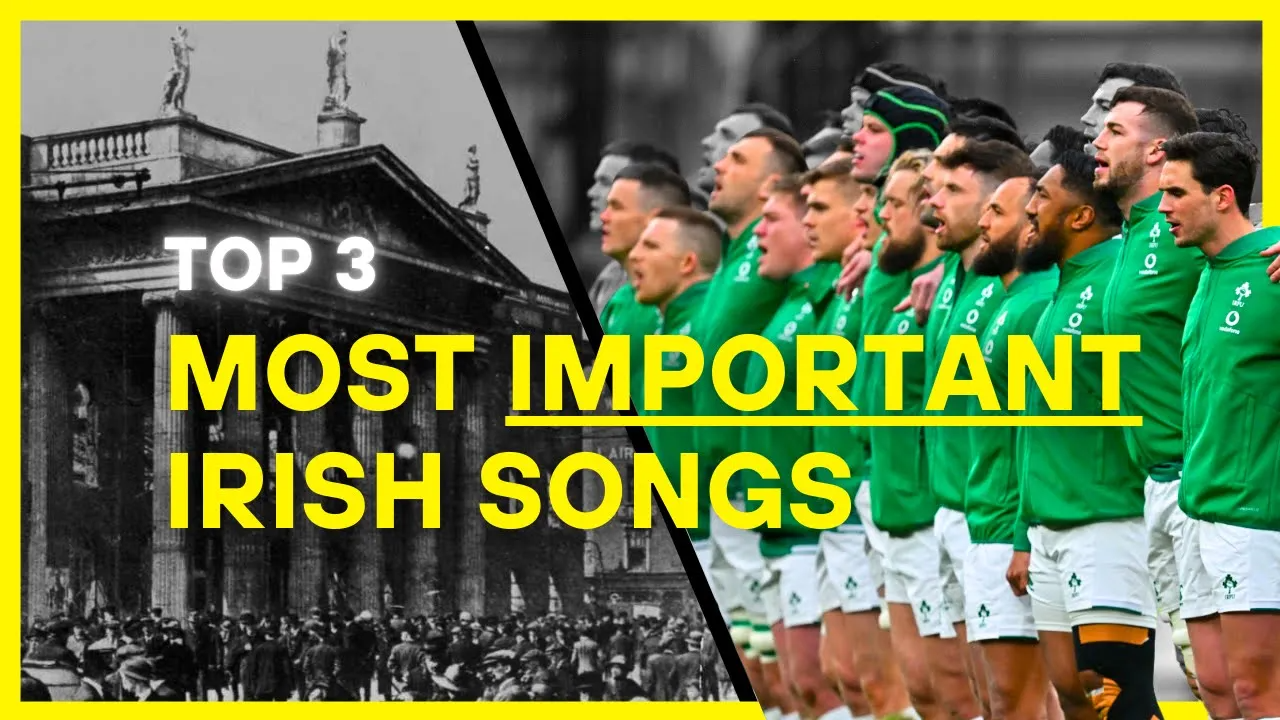
Here, we explore three of the most iconic and significant songs in Irish history—songs that capture the spirit of a nation and continue to resonate with people today.
3. Fields of Athenry
Written in 1979 by Pete St. John, "The Fields of Athenry" is a modern ballad that feels as though it has been sung for centuries. Its power lies in its ability to connect contemporary audiences with one of the most devastating periods in Irish history: the Great Famine of the 1840s.
The song tells the heartbreaking story of Michael, a man from near Athenry, County Galway, who is caught stealing "Trevelyan's corn" to feed his starving family. His punishment is transportation to the Australian penal colony at Botany Bay, a fate shared by many Irish people for minor offenses during that era. The mention of Charles Edward Trevelyan, the British civil servant who oversaw famine relief, adds a layer of historical weight, invoking the controversial policies that exacerbated the suffering.
Though written over a century after the events it describes, "The Fields of Athenry" serves as a powerful and accessible historical narrative. It captures the anguish of separation, the injustice of colonial rule, and the desperation of a people pushed to the brink. The song’s enduring popularity at sporting events and gatherings around the world ensures that the memory of the Great Famine and the resilience of those who endured it remains a vital part of Irish identity.
2. Foggy Dew
Emerging from the crucible of the early 20th century, "Foggy Dew" is a haunting and politically charged ballad that captures the spirit of Irish nationalism in the wake of the 1916 Easter Rising. The most famous version was written by Father Charles O’Neill, a priest from County Antrim, set to the tune of the traditional air "The Moorlough Shore."
The song gives voice to the complex emotions of a generation. While some 210,000 Irishmen fought for the British Empire in World War I, many at home questioned the logic of fighting for the freedom of small nations like Belgium and Serbia while Ireland itself remained under British rule. The heavy casualties suffered by Irish soldiers at battles like Gallipoli deepened this sense of disillusionment.
"Foggy Dew" frames the Easter Rising as a more honorable struggle. Its poignant lyrics argue that it was "far better to die 'neath an Irish sky / Than at Suvla or Sud el Bar," contrasting the foreign battlefields of World War I with the fight for freedom at home. The song memorializes the executed leaders of the Rising and articulates a powerful argument for Irish self-determination. It didn’t just reflect history; it helped to shape the collective memory of 1916, solidifying the Rising as a foundational moment in the struggle for independence.
1. The Soldier’s Song (Amhrán na bhFiann)
At the pinnacle of important Irish songs stands "Amhrán na bhFiann" ("The Soldier’s Song"), the national anthem of Ireland. More than just an official state song, it is a living symbol of the nation’s fight for independence and the revolutionary spirit that defined the early 20th century.
Originally written in English by Peadar Kearney, with music by Patrick Heeney, around 1910, the song was quickly adopted as a marching anthem by the Irish Volunteers. Its defining moment came during the 1916 Easter Rising, when it was sung by rebels inside the General Post Office in Dublin. Its popularity grew in the internment camps that followed, and by the War of Independence, it was widely regarded as the anthem of the revolutionary movement.
What makes "The Soldier’s Song" so significant is that it was not a song looking back on history; it was sung during the making of history. When it was officially adopted as the national anthem in 1926, it was chosen precisely because it was already "on the lips of the people." The Irish translation by Liam Ó Rinn, which is now the official version, further cemented its place in the national consciousness.
The lyrics are a powerful call to arms, a defiant declaration of a nation’s right to be free. Lines like “Sinne Fianna Fáil” (“We are the Fianna of Fál”) connect the modern struggle to the legendary warrior bands of ancient Ireland. It is a song of unity against a common foe, and its stirring melody continues to evoke a sense of national pride and remembrance at ceremonies and GAA matches across the country. "The Soldier's Song" is not just a historical artifact; it is the enduring voice of Ireland itself.