The True Story Behind the Song "Kilkelly, Ireland”
We are used to the myths of Irish history. The rebels, the drinking, the "fighting Irish" legends for example. But the song "Kilkelly, Ireland" is different. It is not a legend, and it is not poetry. It is a real story.
This ballad is built entirely from a stack of real letters sent from a father in County Mayo to a son in America he would never see again.
The Discovery: An Attic in Bethesda
The story of the song doesn't begin in the 1800s. It begins in the late 20th century in Bethesda, Maryland.
Songwriter Peter Jones was helping his parents clear out their attic when he found a wooden box. Inside was a bundle of fragile, yellowing letters that had been preserved for over a century. These letters were addressed to Peter’s great-grandfather, John Hunt, who emigrated from Ireland in 1855.
Peter Jones realized he was holding a spoken record of his ancestors' lives. He knew his great-grandfather’s life in America well, John worked on the railroad, married, and raised children. But these letters filled the silence of the life John left behind in Mayo.
🎵Peter Jones did not invent the lyrics. He simply versified the prose of the actual letters, keeping the chronological order and the specific news from his great-great-grandfather.
To understand the letters, you have to understand the three men involved.
1. The Emigrant: John Hunt (1842-?)
John was the recipient of the letters. He was born around 1842 and sent to America in 1855 at the age of 13. This means his childhood took place entirely during the horrors of the Great Famine. He likely witnessed the devastation of his community before being sent away to Maryland.
He was a dutiful son. We know he sent money back to finance the farm in Mayo, but he never returned.
2. The Father: Brian Hunt
Brian was a tenant farmer in the townland of Urlaur. Brian was illiterate. He could not read the letters John sent, and he could not write the replies. He had to rely on a scribe. His voice in the song is one of stoic sadness, relaying harsh economic realities while constantly asking about John's soul.
3. The Scribe: Pat McNamara
Pat McNamara was the local schoolmaster and a childhood friend of John. Because Brian could not write, Pat acted as the conduit to the outside world. He translated Brian’s spoken Irish or Hiberno-English thoughts into the formal English we hear in the song.
The Letters: A Timeline of Separation
The song is structured into five verses, each representing a specific year or era documented in the letters.
1860: The Reality After the Famine
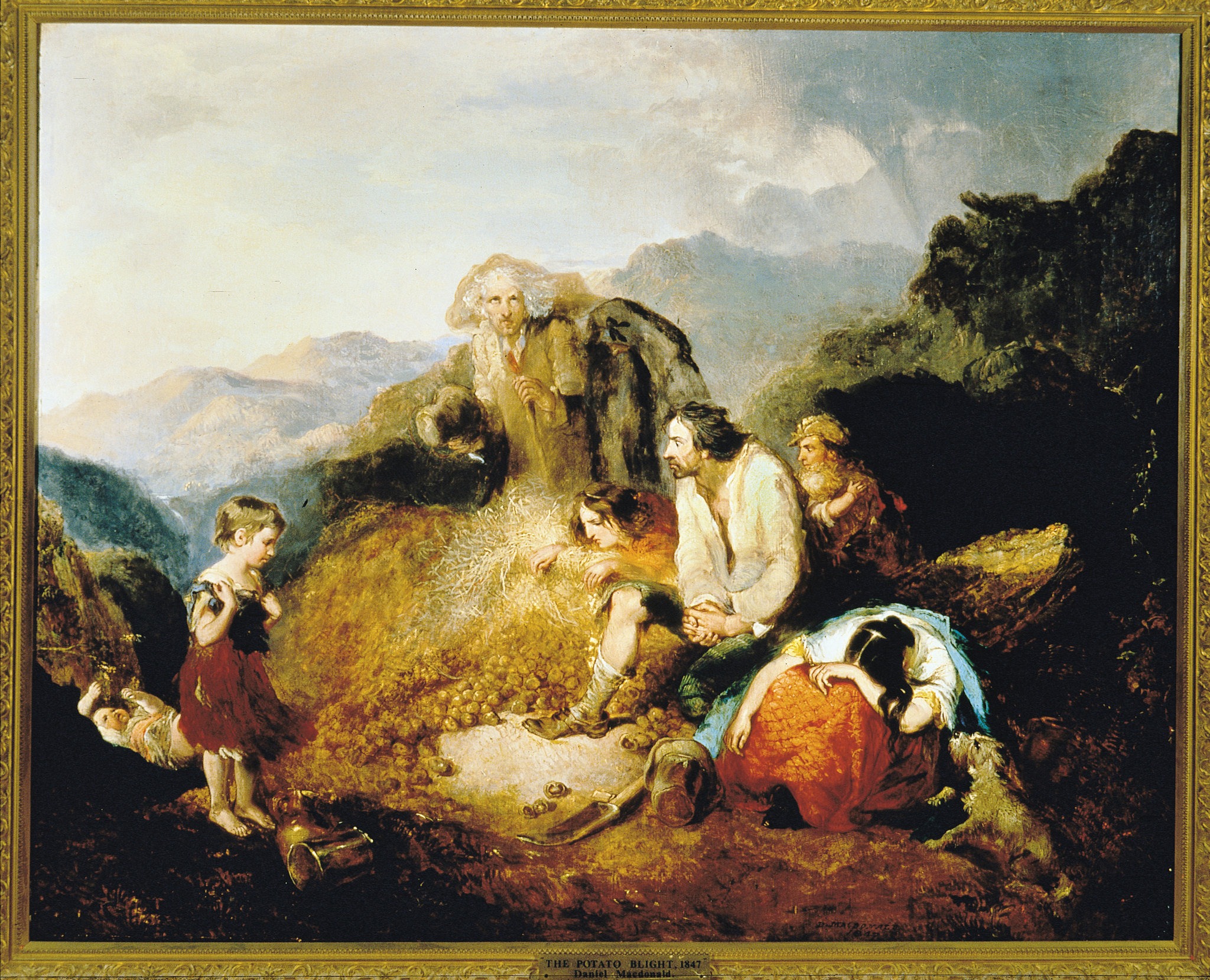
The letters begin in 1858, just a decade after the Famine. The lyrics mention that the "crop of potatoes is sorely infected".
This was a life-or-death crisis. The blight returned periodically in the early 1860s. When Brian Hunt reported that "a third to a half" of the crop was bad, it meant the family would have to buy meal on credit, driving them deeper into poverty.
The letters also convey the parents' fear. John's mother warns him, "Don't work on the railroad". The railroads were notoriously dangerous, and Irish laborers were often given the most hazardous jobs, like blasting and tunneling. They were terrified their son had escaped starvation in Ireland only to be crushed in America.
1870: Rebellion? and "The Trouble"
The lyrics mention that John's brother Michael has "got in a wee bit of trouble". Thought to be a heavy political euphemism. The reality is more mundane.
The "trouble", from other sources online, believe it may refer to the Fenian Rising of 1867 and the agrarian unrest that followed. The Fenians were active in Mayo, recruiting young men to drill for an uprising against British rule. For Michael to be in "trouble," he was likely suspected by the police of being involved with the Fenians.
But actually, he was involved in an accident with another person and legal action was taken against him. It was settled to the amount of 12£. Sounds insignificant but probably to the value of €2,000 in today's money.
1880: The Black-Edged Letter
This verse details the arrival of the news every emigrant feared: the death of a parent.
Elizabeth Hunt, John's mother, passed away. The lyrics say, "She died very quickly". This phrase appears often in emigrant letters. Whether it was true or not, it was a mercy granted by the scribe to the distant son. It tried to prevent the overwhelming guilt John would feel for not being there to comfort her.
💡"The Exile's Guilt" refers to the psychological scar of emigration, specifically the inability to attend the wake and funeral of loved ones back home.
1890: The Land Acts
By 1890, John had been gone for over 30 years. His father was now nearly eighty.
The letters mention Michael returning with money to "buy land". This reflects a massive shift in Irish history. Following the Land War, new laws allowed tenants to borrow money and buy their farms from landlords. Michael's return symbolizes the transition of the Irish peasantry into land owners.
1892: The Final Silence
The final verse brings a change of voice. Brian Hunt is dead.
The letter is now written by one of the brothers. It reveals that the father died calling for John at the very end. This confirms that the trauma of separation was never resolved.
The song ends with an invitation: "Why don't you think about coming to visit?". But the invitation feels hollow. The parents are dead. The home has changed. A visit now would only be a visit to a grave.
The American Wake
John Hunt’s departure in 1855 would have been marked by an "American Wake". Because the journey was expensive and dangerous, the community treated emigration as a death. Neighbors gathered for food, poteen, and music, but the atmosphere was funereal.
The next morning, the family walked John to the crossroads. That moment of separation is the emotional baseline of the entire song.
John Hunt never returned. He had a wife, children, and a job in Maryland. To leave might mean losing everything he had built. His silence is the silence of millions who chose the future over the past, but carried the guilt of that choice forever.